Name the petrol H5 being compared
Request the original designation, engine, transmission, production period and market record. Keep hybrid or other Hongqi models outside a comparison labelled H5 petrol unless the brief is changed explicitly. Hongqi’s global H5 information provides model context, not identity for every used China candidate. The E-QM5 specification review establishes the electric side. Do not choose figures from the newest H5 while pricing an older car. A common marque can help customers recognise the vehicles, but it cannot supply missing equipment or establish which support procedures apply to either offer.
Describe energy access over a normal week
Record home, workplace or public charging opportunities for the E-QM5, alongside the time and distance involved. For the H5, describe the actual petrol supply and normal refuelling arrangements. Reliable access matters more than an attractive energy-price headline that omits queues or travel. The no-home-charging decision tests one electric use case. It does not declare petrol universally easier or cheaper. A buyer with consistent supported overnight charging faces a different choice from one depending on occasional public access during paid passenger work. Compare the routines the customer can actually sustain.
| Finding | Buying response |
|---|---|
| Daily charging route works | Evaluate the electric complete cost |
| Charging disrupts essential duty | Compare the actual petrol alternative |
| Powertrain support unknown | Resolve it before ranking offers |
Test passenger comfort without assuming equivalence
Trial the intended driver, rear passengers and luggage on both candidates. Demonstrate the fitted controls, climate and comfort equipment that influence acceptance. A familiar Hongqi styling feature or trim name is not proof of matching equipment. Use the fitted-equipment record to retain the actual observations and any missing requirement. Record parking and access too. Neither a petrol engine nor an electric motor establishes whether the intended family or business passenger can use the cabin comfortably in the offered configuration.
Apply the right condition assessment to each car
The H5 needs an appropriate engine, transmission, cooling and other vehicle review by a competent provider. The E-QM5 needs its relevant battery, charging and physical condition evidence. Commission the correct scope rather than using one electrical report as a whole-car verdict. The Hongqi EV inspection framework remains applicable to its own systems. Compare available service and repair histories and ask providers to explain unanswered concerns. A quiet electric drive does not certify every component, while a satisfactory short petrol test does not establish every thermal or transmission condition during the customer’s intended duty.
Budget more than fuel or electricity
Use the purchase cost worksheet to put both purchase amounts on the same road-ready boundary. Add supported preparation, actual setup costs and appropriate operating inputs. For the H5, use a relevant observed or supported fuel estimate and local fuel price. For the E-QM5, use the energy-cost worksheet with charging costs and its scope. Avoid turning one favourable test-cycle figure into guaranteed savings. Maintenance, insurance, tyres and possible downtime require their own inputs. A credible comparison leaves unknown costs visible and does not assume that shared-brand parts or provider cover apply equally to both systems.
Check receiving support for the actual powertrain
Ask workshops to identify support for each version, not just whether they service Hongqi. Verify diagnostic access, component identification and the provider responsible for claimed cover. Keep a domestic warranty headline separate from the actual exported vehicle’s terms. Consider how quickly known issues can be assessed and which parts proposal is supported by the supplier. A petrol car’s established local route may be valuable where EV support is uncertain; a well-supported E-QM5 can remain attractive where its regular energy access and present condition are stronger. Neither conclusion follows from the badge alone.
Decide under changed ordinary conditions
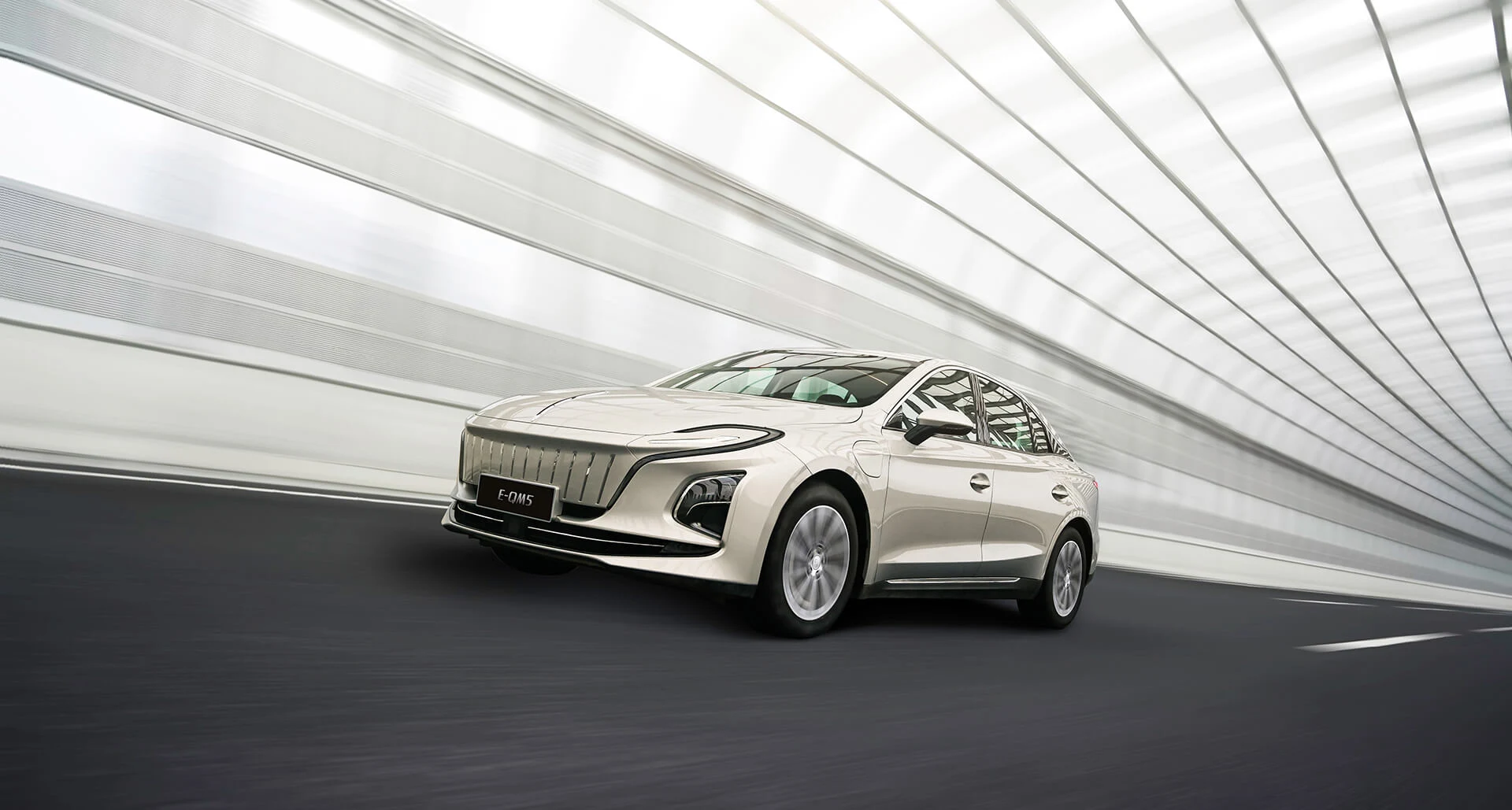
Test the decision with reasonable variations in distance, charging access and energy prices rather than promising a fixed payback. Use the defined-horizon worksheet to preserve those assumptions. Choose the E-QM5 where the useful electric arrangement still fits; choose the petrol H5 where its supported routine better meets essential requirements. Keep uncertain exit values separate from acquisition savings. At handover, preserve each accepted configuration and condition record. The image represents E-QM5, not H5 stock, and the comparison does not claim a universal reliability, efficiency or resale advantage for either vehicle.
Keep the decision clear.
- Actual petrol H5 identity
- Reliable energy access
- Matched passenger trial
- System-specific condition reviews
- Complete cost with changed-use cases
Before you decide.
Does the shared badge imply equal service support?
No. Confirm diagnostics, parts and written support for each actual powertrain and version.
Is cheaper electricity enough to select E-QM5?
Include charging access, setup, time and the rest of the purchase and ownership costs.